B2B Demand Generation
B2B Demand Generation Strategy
Most B2B demand gen fails before the first campaign launches. The problem isn't execution — it's that the bets haven't been set.
The Problem
Demand gen without positioning is just spend
The campaigns launch on time. The content calendar is full. The paid budget is allocated. And pipeline stays flat. The problem isn't that demand gen isn't running. It's that it's running before the company has decided what it's betting on.
Without clear positioning, every channel choice is a guess. The ICP is a spreadsheet, not a conviction. Messaging changes with every campaign because nobody agreed on what the company actually stands for. Demand gen becomes a volume game — more leads, more emails, more spend — instead of a system that compounds.
What It Costs
The budget moves. The pipeline doesn't.
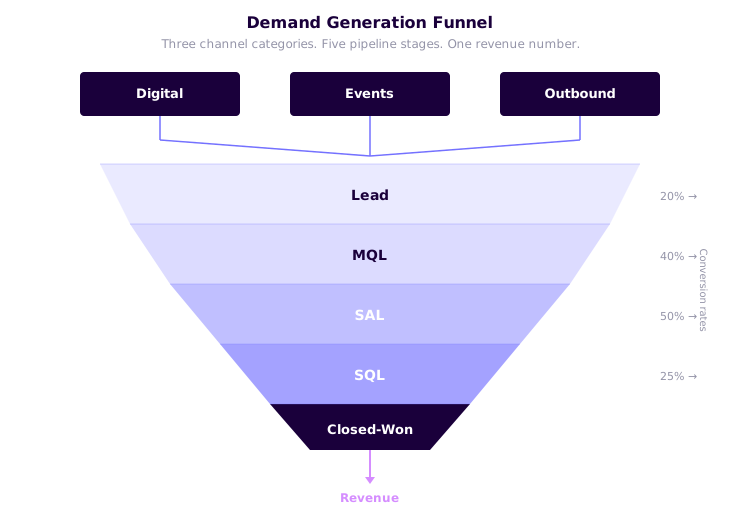
Budget without attribution
Marketing spends across channels. Pipeline appears. Nobody can draw the line between the two. When the board asks which programs produced revenue, the answer is a spreadsheet with assumptions.
Sales losing trust
Leads arrive that sales doesn't want. MQLs that don't match the ICP. Demo requests from people who aren't buyers. Every bad lead erodes the relationship between marketing and sales, and the first thing to go is pipeline collaboration.
Pipeline reporting gaps
Marketing reports on leads. Sales reports on pipeline. The two numbers don't connect. Nobody can answer the question that matters: how much revenue did marketing generate this quarter?
Messaging that resets every quarter
Without positioning as the foundation, messaging drifts. Each new campaign starts from scratch. The brand never builds recognition because the story keeps changing.
What We Build
Demand gen systems built downstream of your bets
Outcome Marketing practitioners don't start with channels. They start with Bets-to-Story — the methodology that turns your strategic bets into defensible positioning and messaging. Demand gen is built on that foundation, not before it.
Channel mix is tied to your ICP's actual buying behavior, not industry benchmarks. Every program connects to pipeline through defined attribution. And for early-stage companies without a marketing team, AI-accelerated delivery compresses the timeline from months to weeks. For the complete event marketing system, from pre-event outreach through post-event measurement, see the free B2B Events Playbook.
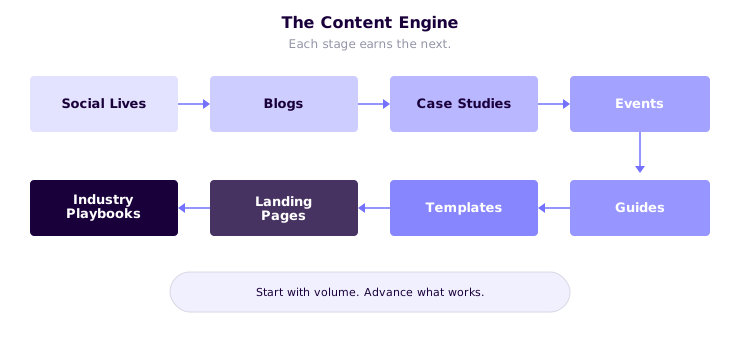
Bets-to-Story as upstream input
Positioning and messaging are set before the first campaign brief is written. Demand gen runs on a foundation that won't shift next quarter.
Channel mix tied to stage and ICP
Not every company needs paid search. Not every ICP responds to LinkedIn. Channel selection is validated against your buyers' actual behavior, not copied from competitors.
Pipeline attribution from day one
Every program is built with attribution in mind. Marketing can answer the revenue question, and sales can see where pipeline actually comes from.
Stage-specific execution
Early-stage companies with no team get a different system than growth-stage companies with misaligned spend. The approach scales to where you are, not where a playbook assumes you should be.
Free Playbooks
Pipeline-grade playbooks for events and social
End-to-end systems for the two demand gen channels where most B2B marketing budget gets wasted. Both free, no email gate.
The B2B Events Playbook
Nine slides covering pre-event outreach, during-event content capture, post-event follow-up, and pipeline measurement.
View Events PlaybookThe B2B Social Playbook
Nine slides covering founder voice cadence, hook construction, the Lives repurposing engine, network amplification, and AEO.
View Social PlaybookProof
Positioning that compounds into pipeline
"Outcome Marketing gave us a practical framework, helping ARPEDIO become recognized as a leader in a new market category for Account-Based Selling technology. It also helped deliver a predictable and scalable pipeline, enabling us to reach +200% revenue growth years in a row."Ulrik Monberg, Founder & CEO, ARPEDIO
The Practitioners
Demand generation practitioners in the network
Practitioners and agencies who build pipeline systems connected to your bets — not generic outbound, not marketing theatre.

Channel Mastered
MSP Channel Programs & Partner Marketing Agency
Builds and scales MSP channel programs for SaaS, cybersecurity, and cloud vendors through a network of 45,000-plus MSPs
View Profile
Belkins
B2B Lead Generation Agency
B2B lead generation and appointment setting at scale, with omnichannel cadence engineered for forecastable pipeline
View Profile
Upside Sales
B2B Outbound & Sales Development Agency
Outbound and revenue-momentum programs for small and mid-sized B2B teams without dedicated SDR functions
View Profile
Rich M. Smith
Fractional CGO
Rich M. Smith Growth Studio
Removes the smoke and mirrors from B2B growth strategy with behavioral science and buyer psychology
View ProfileFrequently asked questions
-
Lead generation captures contact information from people who may or may not be ready to buy. Demand generation builds awareness, trust, and intent before the form fill. A demand generation strategy includes content, events, paid programs, and organic visibility that create demand for your solution in your target market. Lead generation is one tactic within that system. Companies that skip demand generation and jump straight to lead capture typically see high lead volume with low conversion, because the leads aren't ready.
-
B2B demand generation is the system that creates awareness, trust, and purchase intent among your target buyers before they fill out a form or request a demo. It includes content, events, paid programs, organic visibility, and partner channels — all coordinated around your ICP and positioning. The difference between demand generation and lead generation: lead gen captures contact information from whoever shows up. Demand gen builds the conditions where the right buyers show up ready to talk. Companies that invest in demand generation before lead capture see higher conversion rates, shorter sales cycles, and pipeline that sales actually wants to work.
-
Channel priority comes from your bets, not from benchmarks. The Bets-to-Story methodology identifies what your company is betting on, who the buyers are, and where those buyers actually spend attention. That analysis determines whether paid search, LinkedIn, content, events, or partner channels should come first. The order is different for every company because the ICP, competitive landscape, and stage are different. Demand gen that starts with "let's run LinkedIn ads" before answering those questions is guessing.
Related services
Fractional CMO
The leadership layer that connects demand generation to your broader go-to-market system.
Brand Book
The positioning foundation that demand gen runs on. Without it, messaging resets every quarter.
RevOps
The data and attribution layer that connects demand gen spend to pipeline and revenue.
Digital Marketing
Channel strategy and execution grounded in positioning, not platform defaults.
Campaigns
The delivery engine. How the strategy on this page becomes work that ships every week.
Set the bets. Then build the pipeline.
Find a practitioner who builds demand gen systems on positioning, not assumptions.
Browse Marketplace