Website
B2B Website Design in Weeks, Not Months
Positioning first. Then design, development, SEO, and AEO — live on your domain in weeks, not months.
The Problem
When strategy changes, the site should too
A website built before positioning is clear reflects whoever designed it, not the company behind it. The messaging is borrowed from competitors. The structure follows a template. And when strategy shifts — and it will — the site has to be rebuilt because it was never connected to strategy in the first place.
The Outcome Marketing approach inverts this: strategy first, site second. The GTM Blueprint defines the positioning, messaging, and visual direction. The website is built directly from that foundation. The result ages better and converts more effectively because it's grounded in something that doesn't change next quarter.
What You Get
Strategy to live site in weeks, not months
GTM Blueprint workshop
Positioning, messaging, and style guide before a line of code is written. Your Bets Workshop defines what the company stands for. The website reflects it.
Built and launched website
Designed, developed, and live on your domain. Hub-and-spoke architecture built for SEO and AEO. Every page connects to your positioning and speaks to the right audience.
SEO and AEO foundation
Structured data, page schema, keyword-aligned copy, and Lighthouse-optimized performance baked in at build. The site is built to be found — by search engines and AI systems.
Ongoing support path
Hosting, content updates, SEO and AEO monitoring, and optimization available after launch. The site is a living asset, not a one-time project.
How It Works
Three phases. 4–8 weeks.
Phase 1: Strategy
GTM Blueprint workshop and style guide. Bets, personas, competitive landscape, visual direction. The strategic foundation that governs every page. (1–2 weeks)
Phase 2: Build
Design and development directly from the Blueprint. Every page built on the positioning, messaging, and visual direction your team aligned on. SEO, AEO, and schema baked in. (2–4 weeks)
Phase 3: Launch
Review, testing, analytics integration, and go-live. GA4 tracking, CRM forms, Lighthouse audit, redirects, and DNS cutover. Live on your domain. (1–2 weeks)
Proof
Two examples
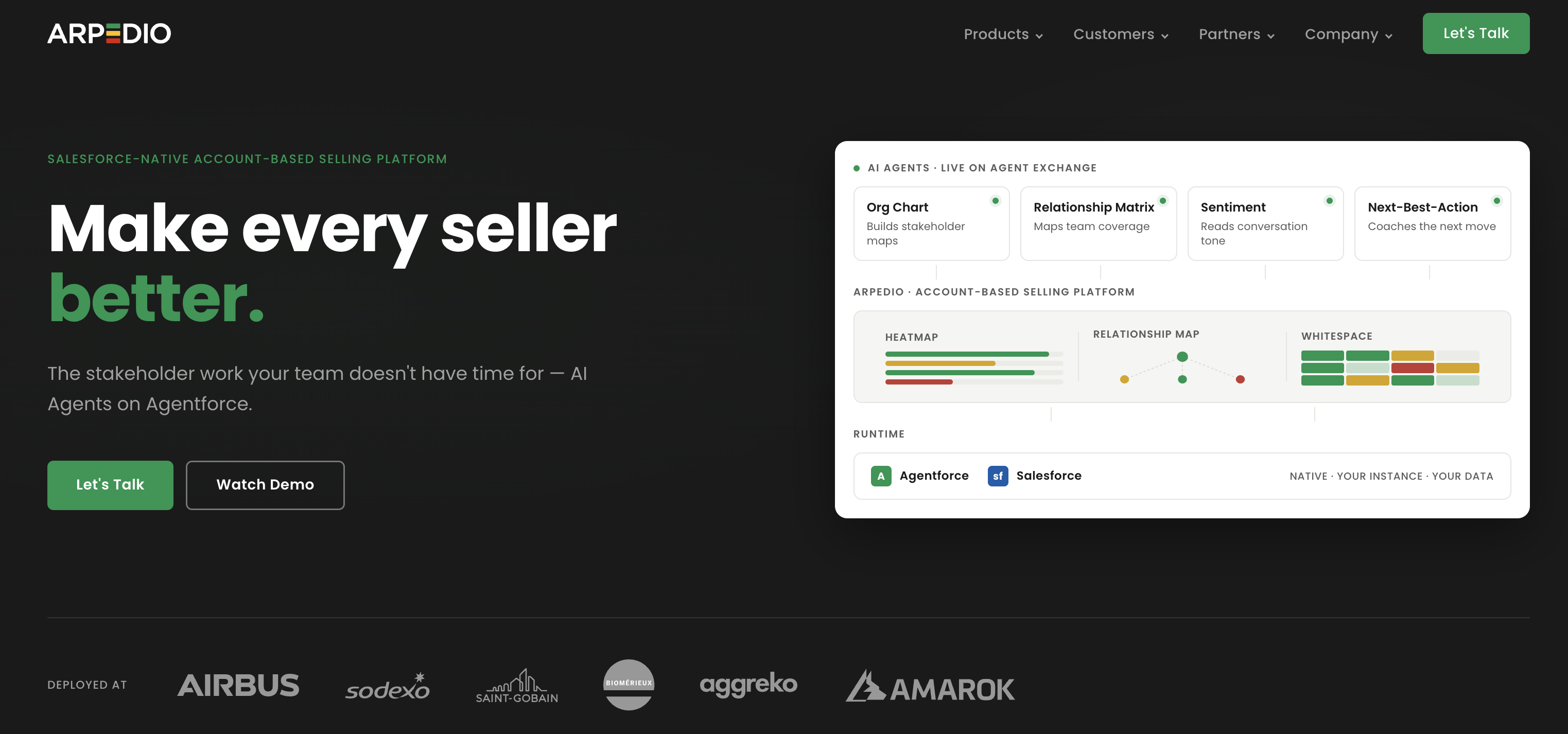
ARPEDIO is a Salesforce-native Account-Based Selling platform serving global enterprises. They needed a site refresh after significant AI innovations in their platform, the divestiture of their consulting business, and to extend SEO strength into AEO.
GTM Blueprint refresh, full rebuild repositioned around agentic ABS, AEO-ready by design.
As AI Overviews absorbed informational search clicks, the rebuild repositioned the site's long-form guides as citation assets. Within months of Google launching AI-visibility reporting, ARPEDIO's guides were appearing in Google AI experiences more than 50,000 times a quarter.
Kaspo is a branded merchandise and event marketing agency serving enterprise clients including Liberty Global, KeyBank, and General Mills. They are also an agency in the Outcome Marketing network.
Kaspo took the full sequence: Competitive Diagnostic, then GTM Blueprint, then the site. Positioning was settled before a page was designed. Outcome Marketing manages the site and runs ongoing SEO and AEO optimization.
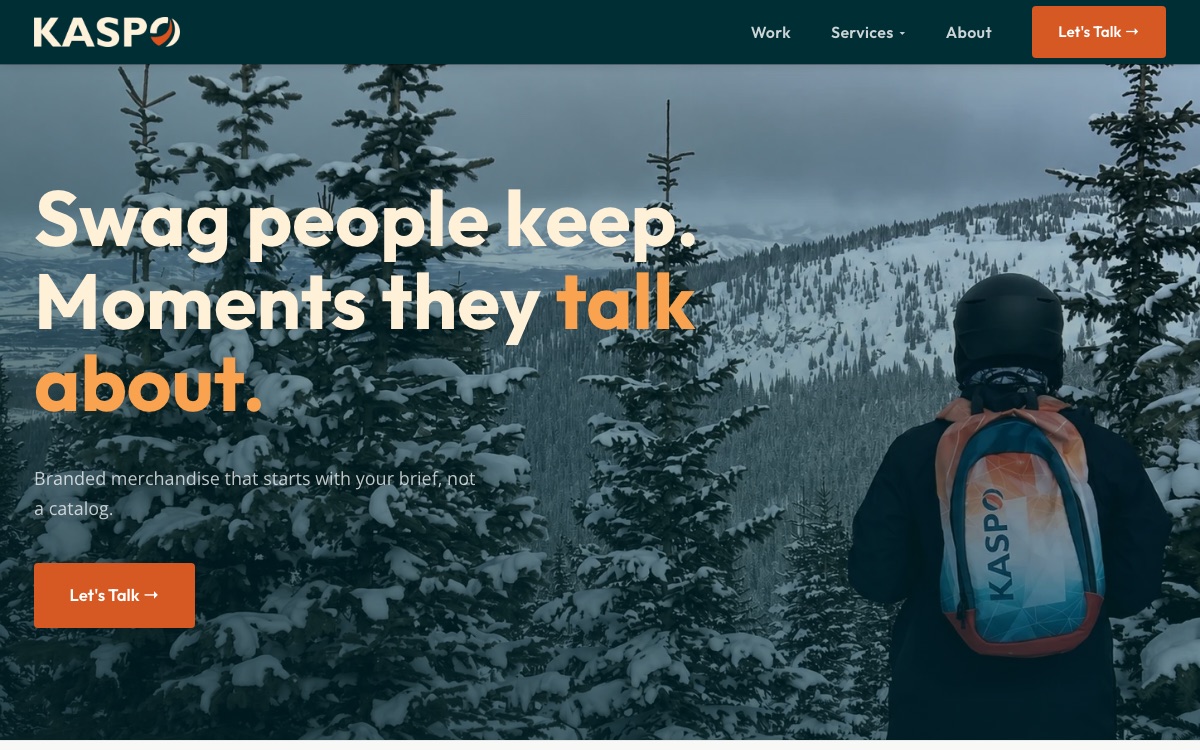
…and so was this one.
Frequently asked questions
-
The build includes the GTM Blueprint (positioning, messaging, competitive landscape, and style guide), a fully designed and developed website deployed on your domain, SEO and AEO optimization (structured data, schema, keyword-aligned copy, Lighthouse performance), analytics integration (GA4 tracking and events), and CRM form integration. The typical build is 10-30 pages with hub-and-spoke architecture. Ongoing hosting, content updates, and SEO monitoring are available after launch.
-
A web design agency starts with wireframes. OM starts with your positioning. The GTM Blueprint — your bets, your competitive landscape, your messaging architecture — is built before the first page is designed. That means the site reflects your strategy, not a designer's interpretation of your logo and color palette. The timeline is also different: 4–8 weeks from workshop to live site at $9–18K depending on scope, compared to 2–4 months and $30–80K at a typical agency. And the site is built with SEO, AEO, and structured data from day one, not bolted on after launch.
-
Three tiers based on scope. Small ($9,500): up to 10 pages, roughly 4 weeks — focused B2B sites with one primary funnel. Medium ($12,500): up to 20 pages, 6 weeks — multiple service lines, content depth, persona pages. Large ($18,000): up to 35 pages, 8 weeks — pillar-and-spoke architectures, larger portfolios, content-heavy sites. All tiers include the GTM Blueprint, design and development, full source code, on-page SEO and structured data, GA4 setup, copywriting, contact form, and responsive design. Full package details are published on our Clutch profile.
-
You own your domain, your content, and your deployed site. After launch, ongoing support is available: hosting and uptime monitoring, content updates, SEO and AEO monitoring, blog content, and paid media management. These are structured as monthly tiers — you choose what you need. An annual performance review provides a deep diagnostic and refresh to keep the site aligned with your evolving strategy.
-
Conversion starts with positioning, not design. A B2B website converts when the messaging matches what the buyer is looking for at each stage of their journey — from problem-aware to solution-aware to ready-to-act. The GTM Blueprint defines that messaging before the site is designed. Each page is built with a clear purpose, a specific audience, and a CTA that matches where the reader is in their decision. Structure, schema, and page speed handle the technical side. But the strategic foundation is what makes the difference between a site that looks good and a site that generates pipeline.
Strategy first. Site second. Weeks, not months.
The positioning defines the website. The website brings it to life. And once it's live, campaigns carry it to market.
Talk to Advisor