B2B Digital Marketing
B2B Digital Marketing Strategy
Most B2B digital marketing budgets go to channels chosen by convention. Outcome Marketing practitioners start with where your buyers actually are.
The Problem
Channels chosen by convention, not by evidence
The channel mix looks like every other B2B SaaS company's because it was copied from one. LinkedIn ads because "that's where B2B lives." Google Ads on competitor keywords because the agency recommended it. SEO on terms your buyers don't actually search. A website converting at 1-2% because the messaging doesn't match the intent that brought visitors there.
The problem isn't that digital marketing isn't running. It's that nobody validated whether the channels, the targeting, or the messaging match your ICP's actual buying behavior. Without that validation, every budget increase just amplifies what's already not working.
What It Costs
More spend. Same pipeline.
Rising CPL without rising pipeline quality
Cost per lead climbs quarter over quarter. But pipeline quality stays flat or declines. The leads are getting more expensive, not better. The channel isn't broken. The targeting is.
Content that doesn't rank
Blog posts and landing pages target keywords your competitors rank for, not keywords your buyers search for. The content calendar is full, but organic traffic doesn't grow because the keyword strategy doesn't match your ICP.
Traffic that doesn't convert
The website gets visitors. They don't become pipeline. Messaging speaks to a general audience instead of the specific buyer you need. The visit-to-lead gap widens because the page doesn't answer the question the visitor actually had.
Marketing budget hard to defend
When channels can't be tied to pipeline, marketing budget becomes the first cut in a down quarter. The team knows digital is working somewhere, but nobody can prove where. The board conversation shifts from "invest more" to "prove what we have."
What We Build
Digital marketing grounded in your ICP, not industry benchmarks
OM practitioners audit before they recommend. Channel strategy starts with evidence — where your buyers actually spend attention, which keywords they actually search, and what messaging converts them. The audit is the foundation. Everything else builds on it.
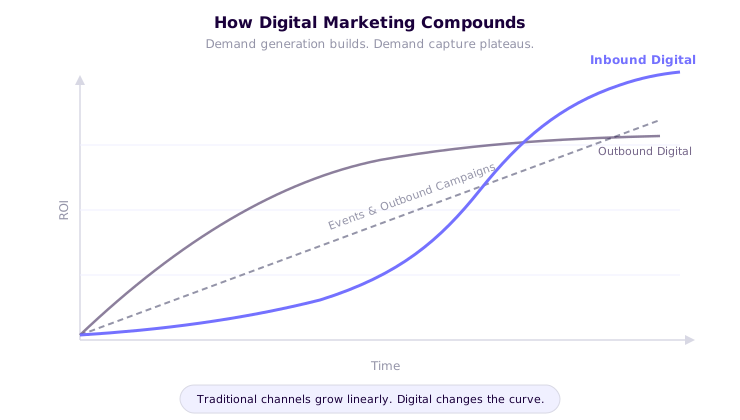
The scope covers the full B2B digital marketing stack: paid (PPC and LinkedIn matched to funnel stage), organic (SEO and content matched to ICP), and website optimization. Each channel is connected to pipeline through attribution, and the strategy ties back to your positioning and go-to-market bets.
Channel strategy from evidence
Not every B2B SaaS company needs LinkedIn ads. Not every ICP searches Google for solutions. Channel selection is validated against your buyers' behavior, not copied from a competitor's media plan.
Paid matched to funnel stage
PPC and paid social targeted by buying stage, not just demographics. Top-of-funnel awareness campaigns run different creative and bidding than bottom-of-funnel capture campaigns. Each stage has its own KPIs.
SEO and content matched to ICP
Keyword strategy built from what your buyers actually search, at the search volumes and competition levels where you can rank. Content serves the buyer's question, not the content calendar.
Website optimization
Messaging, page structure, and conversion paths aligned to the buyer intent that brought the visitor there. When the page answers the right question, conversion rates improve without increasing traffic.
Not sure where your digital marketing stands? Get Diagnostic
Proof
Strategy matched to stage and ICP compounds faster
"This book reads a lot more like an actionable playbook than a theoretical treatise on marketing. Highly recommend for any marketing leader looking to sharpen their approach."Dominick Scafidi
The Practitioners
Digital marketing practitioners in the network
Practitioners and agencies who build channel strategy grounded in positioning — paid, organic, and content programs that connect to pipeline.

Oh Wow Creative
Creative & Production Agency
Brand photography, video production, and event streaming for B2B technology and enterprise clients
View Profile
Ryan Miller
Fractional CGO
Team Vertice
Builds the B2B marketing strategies competitors hate, then aligns sales and marketing to actually execute them
View Profile
RefractROI
Digital Marketing Agency
Integrated digital marketing for B2B companies that need pipeline, not just traffic
View Profile
Michael Elliott
Fractional CMO
Marketing at the Edge
Demand generation and GTM leader across Dell, NetApp, and emerging B2B tech
View ProfileFrequently asked questions
-
A B2B digital marketing consultant audits your current digital presence, identifies where your ICP actually engages, and builds a channel strategy grounded in evidence. That includes paid media (PPC, LinkedIn), organic (SEO, content), and website optimization. The difference between a consultant and an agency is scope: a consultant sets strategy and connects channels to pipeline, rather than executing one channel in isolation. For B2B SaaS companies, the right consultant ties digital marketing to your positioning and go-to-market bets, not just campaign metrics.
-
It depends on your ICP, your stage, and your competitive landscape. LinkedIn and Google Ads are common starting points for B2B SaaS, but "common" doesn't mean "right for you." Some ICPs respond better to content and community. Others are reachable through partner channels or events. The answer comes from auditing where your buyers actually spend attention, not from copying the channel mix of companies at a different stage with a different audience. Channel selection should follow evidence, not convention.
-
Pipeline, not impressions. The metric that matters is whether digital marketing generates qualified pipeline that converts to revenue. Impressions, clicks, and leads are leading indicators, but they're not proof. A Competitive Diagnostic examines your current channels, attribution, and conversion paths to identify what's working, what's not, and where budget is being wasted. The assessment takes your actual data and maps it to pipeline outcomes.
Related services
Fractional CMO
The leadership layer that connects digital marketing to your broader go-to-market system and positioning.
Demand Generation
The pipeline system that digital marketing channels feed into. Built on positioning, not activity metrics.
Competitive Diagnostic
Digital marketing audit services that benchmark your channels, attribution, and conversion paths against up to 4 competitors. Evidence before recommendations.
Start with where your buyers are
Find a practitioner who builds digital marketing strategy from evidence, not convention.
Browse Marketplace